-
✅
Jan. 14
-
📣
Jan. 14
-
To be announced
Prof. Dr. Klaus GramannJan. 14
-
Toward Clinical Trial Readiness: Cross-Species EEG Biomarkers in Neurodevelopmental Disorders
Dr. John J. FoxeJan. 14
-
☕
Jan. 14
-
The utility of cognitive ERPs in the management of addictive disorders.
Dr. Salvatore CampanellaJan. 14
-
Hormones as a hidden source of variability: EEG and psychophysiological insights into women's brain health
Prof. Dr. Ramunė GrikšienėJan. 14
-
Peak Alpha Frequency as a Biomarker of Neuroimmune Vulnerability to Chronic Postsurgical Pain
Dr. Ali MazaheriJan. 14
-
🥗
Jan. 14
-
EEG Biomarkers, AI and Precision Psychiatry
Prof. Dr. Sebastian OlbrichJan. 14
Event ANT Neuromeeting 2027 - Berlin
starts on
Jan 14, 2027, 8:00:00 AM
(Europe/Berlin)
To be announced
(30 minutes)
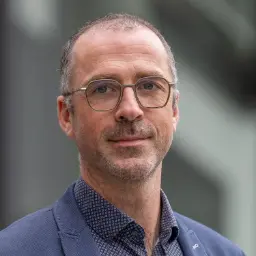
Prof. Martin Bleichner
Professor
at Carl von Ossietzky Universität Oldenburg
Prof. Martin Bleichner
Professor
at Carl von Ossietzky Universität Oldenburg
Biography:
Prof. Dr. Martin Bleichner is a DFG Heisenberg Professor at the University of Oldenburg, Germany, where he leads the Translational Psychology Group. His research aims to understand how the human brain functions in everyday life, using auditory perception as a window into cognitive processes such as attention, information processing, and changes in mental states.
A central aim of his work is to move neurophysiological research beyond traditional laboratory settings and study brain activity under natural, real-world conditions. To achieve this, his group develops and applies mobile EEG technologies, including ear-centered EEG and wearable systems that enable continuous recordings during everyday activities.
His research combines technological development with experimental cognitive neuroscience to investigate how brain responses vary across situations, environmental demands, and internal states. By bridging controlled laboratory experiments and naturalistic settings, he aims to advance our understanding of human brain function in everyday life.
Talk Abstract:
Understanding how the brain functions in everyday life requires moving beyond traditional laboratory settings. In this talk, I will present two complementary approaches to bringing neurophysiological research closer to the real world.
The first approach involves taking the laboratory to the people. I will introduce our plans for a mobile research laboratory, a specially equipped research van currently under development that will allow us to conduct controlled EEG experiments outside the university, reach more diverse populations, and bring neuroscience into public spaces.
The second approach involves taking the recording equipment out of the laboratory altogether. I will present nEEGlace, our open-source, standalone EEG recording system designed for long-term measurements during everyday activities. The neck-worn device supports both ear-centered EEG and conventional EEG caps, with onboard data acquisition, storage, and synchronized acoustic monitoring, eliminating the need for external recording devices.
Together, these approaches offer new opportunities for studying the brain beyond the lab.